Interior Film Supplier in India: What Designers, Architects & Contractors Should Look For
An interior film supplier requires evaluating design variety, product authenticity, surface compatibility, samples, availability, installation support, technical guidance, and project-scale service for professionals.
Choosing an interior film is not only about finding an attractive colour or texture. For architects, interior designers, contractors, and project buyers, the supplier behind the product can be equally important.
The right interior film supplier in India should be able to offer suitable products, consistent quality, multiple finishes, technical guidance, and support for different project requirements. This becomes especially important when films are being used across furniture, walls, doors, cabinets, offices, hotels, retail spaces, or large commercial projects.
With interior films becoming an increasingly practical option for surface renovation, understanding what to look for in a supplier can help professionals make better project decisions.
What Is an Interior Film?
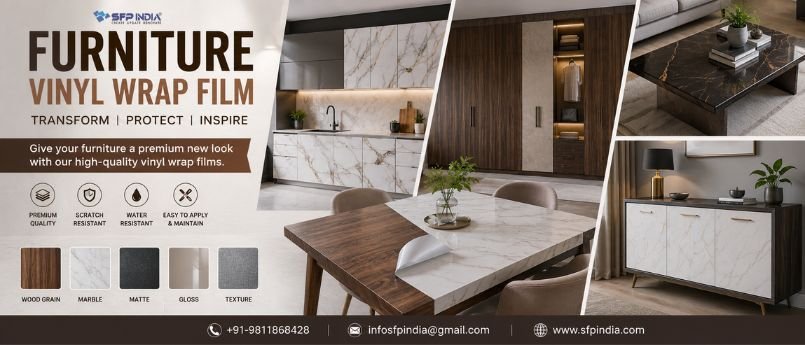
Interior film is a decorative surface material designed to change the appearance of an existing interior surface without necessarily replacing the underlying material.
Depending on the product, interior films can create finishes inspired by:
- Natural wood
- Marble
- Stone
- Metal
- Fabric
- Solid colours
- Textured surfaces
- Decorative patterns
Self-adhesive interior films are commonly used on suitable walls, furniture, doors, cabinets, and other interior surfaces.
For example, Hyundai Bodaq Interior Film is positioned as a premium self-adhesive decorative film for applications including walls, furniture, doors, and cabinets. The product range also includes several other interior and decorative film categories.
Why Is the Supplier Important?
Two films may appear similar in a catalogue, but the overall project experience can be very different.
Professionals need to consider more than the design. They may also need to evaluate:
- Product authenticity
- Finish consistency
- Available designs
- Surface compatibility
- Material availability
- Installation requirements
- Project quantity
- Technical support
- Delivery capability
- After-sales assistance
For a small residential makeover, these factors may be relatively simple. For a hotel, office, retail chain, or multi-location project, they can have a much greater impact on project execution.
1. Look for a Wide Range of Interior Film Designs
Design flexibility is one of the main reasons professionals choose interior films.
A good supplier should provide different design directions rather than limiting projects to a few standard finishes.
Depending on the requirement, designers may look for:
Wood finishes:
Suitable for wardrobes, doors, furniture, wall panels, and office interiors.
Marble and stone finishes:
Useful for feature surfaces and premium-looking interiors.
Metallic finishes:
Can work well for contemporary commercial and decorative applications.
Solid colours:
Useful when a clean, minimal or brand-specific appearance is required.
Textured finishes:
Can add depth and visual character to furniture and architectural surfaces.
The product portfolio includes Bodaq Interior Film along with decorative glass films, PVC self-adhesive films and other interior surface products.
2. Check Product Authenticity and Brand Availability
For professional projects, product source matters.
Architects and contractors often have to specify materials that meet a particular design and performance requirement. Using an unidentified or inconsistent product simply because it looks similar can create problems later.
A supplier should clearly communicate:
- Brand
- Product series
- Design or pattern
- Application suitability
- Available sizes
- Product specifications
- Availability
- Installation requirements
A supplier offering established brands and clearly identified product ranges can make material selection easier for professionals.
3. Consider Surface Compatibility
Not every interior film is automatically suitable for every surface.
Before selecting a product, the project team should consider:
- Surface condition
- Smoothness
- Cleanliness
- Existing finish
- Material type
- Edges and corners
- Moisture exposure
- Expected level of use
Common project surfaces can include furniture panels, MDF, doors, cabinets, wall panels, glass and other suitable interior substrates.
The important point is that surface preparation and product suitability should be checked before installation.
A good supplier should be able to guide the buyer toward the appropriate film for the intended application rather than simply recommending a design.
4. Evaluate Installation Support
A premium film can still produce poor results if the surface is not prepared correctly or the application is handled improperly.
Installation may involve:
- Inspecting the surface
- Cleaning and preparing it
- Measuring the area
- Cutting the film accurately
- Applying the material carefully
- Managing corners and edges
- Removing air bubbles
- Finishing the surface
For architects and contractors, access to installation guidance can therefore be an important part of supplier selection.
Installation support can be particularly useful for project-based requirements where multiple surfaces or large areas are involved.
5. Ask About Project-Scale Availability
Material availability becomes especially important when working on larger projects.
Imagine a contractor needs the same finish for:
- 50 hotel doors
- Multiple wardrobes
- Reception panels
- Office partitions
- Several retail locations
A design may look perfect, but if the required quantity is unavailable when the project needs it, the schedule can be affected.
Before finalising a film, project teams should therefore ask about:
- Current stock
- Required quantity
- Lead time
- Batch availability
- Repeat-order availability
- Delivery coverage
This is one reason working with an established supplier can be useful for commercial and bulk requirements.
6. Look Beyond Design: Consider Performance
Interior film selection should balance appearance with practical requirements.
Depending on the product and application, professionals may consider characteristics such as:
- Scratch resistance
- Moisture resistance
- Cleaning requirements
- Durability
- Adhesion
- UV stability
- Fire-related specifications
- Maintenance requirements
However, these characteristics can vary by product and series, so they should be checked against the manufacturer's specifications rather than assumed for every film.
Product specifications should always be reviewed before selecting a particular film for a demanding application.
7. Choose a Supplier That Understands Different Applications
An experienced supplier should understand that the same film category can serve very different project requirements.
Residential Interiors
Interior films can be considered for:
- Wardrobes
- Kitchen cabinets
- Doors
- Furniture
- Feature walls
- Decorative panels
Offices
Businesses may use films for:
- Reception areas
- Workstations
- Meeting rooms
- Doors
- Cabinets
- Wall panels
Hotels and Hospitality
Large hospitality projects may require coordinated finishes for:
- Guest-room doors
- Furniture
- Reception areas
- Decorative panels
- Lift interiors
- Common areas
Retail and Commercial Spaces
Retail projects may use interior films to refresh:
- Counters
- Display areas
- Walls
- Furniture
- Doors
- Brand-specific interior elements
The ability to select products according to the application—not simply according to appearance—is an important part of professional material sourcing.
8. Consider Decorative Glass Film Separately
Interior surface projects often involve glass as well as solid surfaces.
Decorative glass films can be used for applications such as:
- Glass doors
- Windows
- Room dividers
- Office partitions
- Bathroom privacy
- Decorative glass surfaces
Decorative glass-film solutions are available for applications related to privacy and glass decoration.
This means a supplier with both interior and glass-film categories can be useful when a project requires multiple surface solutions.
9. Ask for Samples Before a Large Order
A digital catalogue is useful for narrowing down options, but physical samples can help professionals understand the actual material.
Before final selection, it can be useful to check:
- Actual colour
- Texture
- Surface feel
- Pattern scale
- Gloss level
- Appearance under different lighting
- Compatibility with surrounding materials
This is particularly useful for wood, marble, metallic and textured finishes, where the appearance on a screen may differ from the physical product.
10. Check Whether the Supplier Can Support Architects and Contractors
Professional buyers often need more than a product catalogue.
They may need help with:
- Product selection
- Finish matching
- Quantity estimation
- Application guidance
- Bulk orders
- Samples
- Project requirements
- Installation coordination
A supplier that understands these requirements can make the material-selection process more straightforward.
What Makes a Good Interior Film Supplier in India?
Instead of judging a supplier only by price, designers and contractors can use a broader checklist.
|
Factor |
What to Check |
|
Product range |
Wood, marble, stone, metallic, solid and textured finishes |
|
Brand |
Authentic and clearly identified products |
|
Application |
Suitability for the intended surface |
|
Quality |
Consistent finish and product specifications |
|
Availability |
Stock and lead time |
|
Samples |
Physical samples before large orders |
|
Installation |
Guidance or professional support |
|
Bulk supply |
Ability to handle larger requirements |
|
Technical support |
Product and application guidance |
|
Delivery |
Reliable project-wise delivery |
|
After-sales support |
Assistance after material supply |
The best choice for a project ultimately depends on its surface, design concept, budget, quantity, installation conditions, and performance requirements.
Why Interior Films Are Becoming Relevant for Modern Renovation
Traditional renovation can involve removing existing surfaces and replacing them with new materials. Interior films provide another approach: refreshing suitable existing surfaces instead of replacing everything.
This can be particularly useful when the underlying furniture, panels, doors or other surfaces are still usable but their appearance needs updating.
For commercial projects, the appeal can be even more practical because reducing disruption can be an important consideration.
Interior film solutions can support faster surface transformation across residential, office, hospitality and retail environments.
Why SFP India for Interior Film Projects?
SFP India offers a range of interior and decorative surface products, including Bodaq Interior Film, D-C-FIX, Alkor, SOIF, Saek Dareun, Solyx and other film Brands.
Its product portfolio allows professionals to explore different solutions depending on whether the project involves furniture, walls, glass, decorative surfaces or other interior applications.
For architects, designers, contractors and project buyers, the focus should be on selecting the right product for the right surface and application. A supplier that can support this process can become a practical part of the project workflow rather than simply a source for materials.
Final Thoughts
An interior film manufacturer India should involve more than comparing prices.
Designers, architects and contractors should consider product authenticity, design variety, surface compatibility, material availability, installation support, project quantities and technical guidance.
Interior films can provide a practical way to refresh suitable existing surfaces while giving designers considerable freedom in colours, textures and finishes. The key is to match the right film with the right application.
For professional projects, a supplier with a broad product portfolio and project-oriented support can make that selection process more efficient and predictable.
FAQ's
What should I look for in an interior film supplier in India?
Look for product authenticity, design variety, surface compatibility, availability, installation guidance, samples, bulk-order capability and project support.
Which surfaces can interior films be used on?
Depending on the specific product, interior films can be used on suitable furniture, cabinets, doors, walls, panels and other interior surfaces. Surface preparation and manufacturer specifications should always be checked before installation.
Can interior film be used for commercial projects?
Yes. Interior films can be used in suitable commercial applications such as offices, hotels, retail stores, showrooms and other interior spaces. The appropriate product should be selected according to the surface and project conditions.
How do I choose the right interior film design?
Start with the project's overall design concept, lighting, existing materials and intended use. Requesting physical samples can also help compare colours, textures and finishes before placing a larger order.
Is installation support important when buying interior film?
Yes. Proper surface preparation and application can affect the final appearance and performance of the film. Installation guidance can therefore be valuable, particularly for larger or more complex projects.
Can one supplier provide both interior and glass films?
Some suppliers offer multiple surface-film categories, allowing professionals to source interior films as well as decorative glass-film solutions for projects requiring multiple surface applications.