Why Architects and Interior Designers Prefer Self Adhesive Wallpaper: Easy Installation, Removal and Design Flexibility
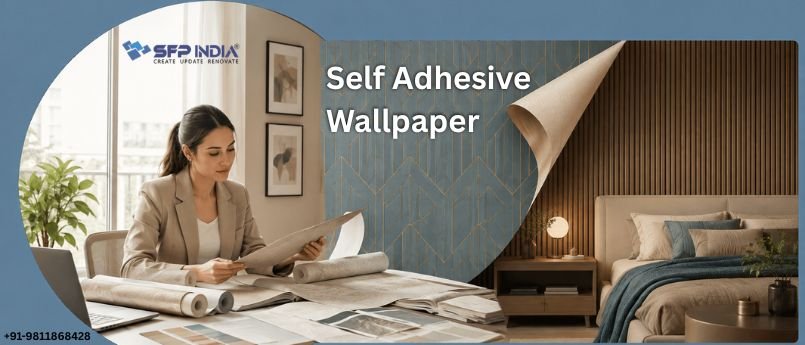
This is where Self Adhesive Wallpaper has become a practical choice for architects and interior designers. It offers a way to introduce colour, texture and patterns without turning every design change into a major construction job.
A wall doesn't always need paint, tiles or expensive panelling to look completely different.
Sometimes, changing the surface is enough.
This is where Self Adhesive Wallpaper has become a practical choice for architects and interior designers. It offers a way to introduce colour, texture and patterns without turning every design change into a major construction job.
More importantly, it gives designers room to experiment.
A concept can be tested, changed and refreshed without committing to a permanent finish.
The Appeal Starts With Installation
Traditional wallpaper installation can involve adhesive preparation, careful application and considerable attention to alignment. Self adhesive options simplify part of that process because the adhesive backing is already incorporated into the product.
The basic process is relatively straightforward:
- Prepare and clean the wall surface.
- Measure the area carefully.
- Peel the backing gradually.
- Position the wallpaper while avoiding unnecessary creases.
- Smooth the surface as it is applied.
- Trim excess material around edges and corners.
Of course, the quality of the final result still depends heavily on surface preparation and installation technique.
A dusty, damp or uneven wall can create problems regardless of how good the wallpaper itself is.
Why Designers Like the Flexibility
Interior design rarely happens in isolation.
An architect may have to work around furniture, lighting, flooring, windows and existing architectural elements. A designer may also need to create different moods within the same property.
A single wallpaper finish may not suit every situation.
With Self Adhesive Wallpaper PVC, designers can explore options such as:
- Subtle textures for bedrooms
- Bold patterns for feature walls
- Wood and stone inspired finishes
- Geometric designs for offices
- Decorative surfaces for retail spaces
- Elegant patterns for hospitality interiors
- Branding related visuals for commercial environments
The design possibilities can be especially useful when a wall needs to become a visual focal point without adding bulky materials.
Removal Matters More Than People Think
Imagine an interior designer working on a rented office.
The company wants a more polished workspace, but it may not want to invest in permanent structural changes. A removable wall finish can provide a way to update the appearance while keeping future flexibility in mind.
The same consideration applies to exhibitions, retail displays, temporary offices and frequently updated commercial interiors.
That doesn't mean every self adhesive waterproof wallpaper will come off perfectly from every surface. Existing paint quality, wall condition, adhesive strength and installation duration can all affect removal.
So the product should always be matched to the wall and intended application.
Self Adhesive vs Traditional Wallpaper
|
Factor |
Self Adhesive Wallpaper |
Traditional Wallpaper |
|
Adhesive |
Backing is already adhesive |
Separate adhesive generally required |
|
Installation |
Relatively straightforward |
Requires more preparation |
|
Design changes |
Convenient for selected applications |
Usually more involved |
|
Removal |
Can be easier, depending on surface and product |
May require more effort |
|
DIY suitability |
Possible for smaller areas |
Often benefits from professional installation |
|
Application flexibility |
Useful for temporary or changing interiors |
Better suited to longer-term applications |
This doesn't make one universally better than the other.
The right choice depends on the project.
Where It Makes Sense in Real Interiors
A feature wall behind a reception desk can establish the visual identity of an office.
A patterned wall can give a restaurant a distinct character.
A children's room can be refreshed as the child grows.
A retail store can update a display area without rebuilding the entire interior.
These are relatively simple changes, but they can have a noticeable effect on how a space feels.
That is the real attraction.
Design flexibility without unnecessary structural work.
What Architects Should Check Before Specifying It
A good-looking sample is only the beginning.
Before selecting Self Adhesive Wallpaper rolls, consider:
- Is the wall smooth and properly prepared?
- Is there moisture or dampness?
- What surface will the wallpaper be applied to?
- How long is the finish expected to remain?
- Will the area receive heavy contact?
- Is the wallpaper suitable for the intended environment?
- How will it be removed later?
- Does the pattern require careful alignment?
For larger projects, ordering a sample before committing to the full quantity can also help assess colour, texture and application behaviour under actual lighting conditions.
SFP India: Helping Designers Explore Surface Possibilities
For architects and interior designers, material selection is rarely about appearance alone. Installation, maintenance, flexibility and the future use of the space all influence the decision.
SFP India offers decorative surface solutions for interiors, including wallpaper and self adhesive products that can help designers experiment with different visual treatments.
The value of Self adhesive wallpaper for kitchen lies in its ability to make design changes more approachable. It can transform a plain wall, create a feature surface or refresh an interior without necessarily turning the project into a major renovation.
That flexibility is particularly useful when interiors are expected to evolve.
A well-designed space doesn't always need permanent materials everywhere. Sometimes, the smartest design decision is choosing a finish that can change when the space does.
For decorative wall solutions and self adhesive surface options, explore SFP India's range at www.sfpindia.com and choose the finish according to your wall condition, design requirements and intended application.